Origins of Culture
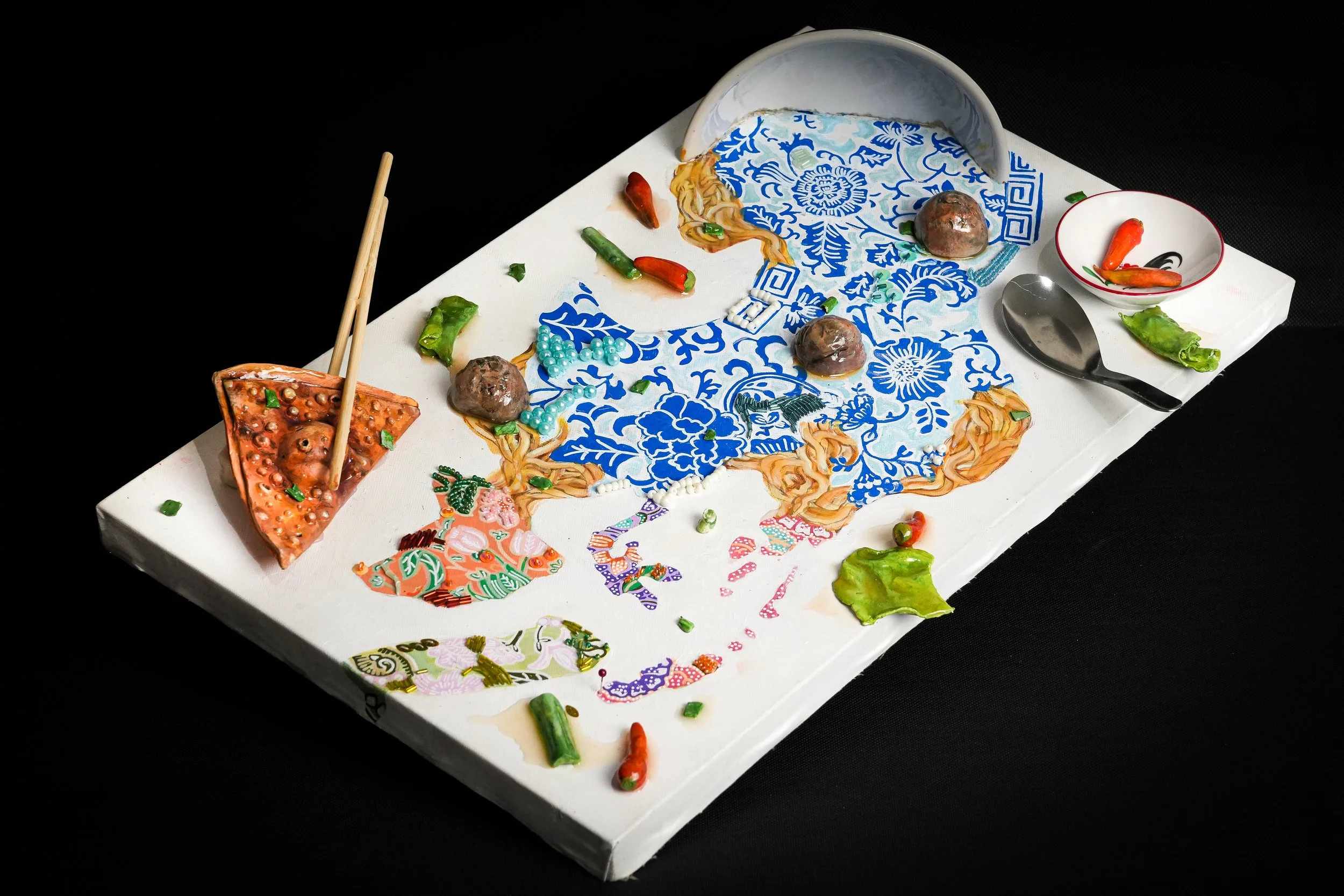
Origins of Culture, 2024, 4" x 20" x 12", Acrylic, markers, clay & embroidery beads on canvas
Bridging my love of food, history, textiles, and mixed media, this piece tells the story of my grandparents’ migration during the Second World War and the struggles they faced to make ends meet in Indonesia. This traditional meatball soup, called Bakso Kuah, is served with Pangsit Goreng, chili, and chives, which I replicated using clay. Commonly eaten at birthday celebrations, this dish (more specifically, the noodles) signifies “long life”, but it is also eaten on regular Sundays during family catch-ups. “The reason for a rooster design is probably because ‘rooster’ sounds like ‘family’ or ‘home’ in Hokkien, one of the Chinese dialects. As such, many felt that when they ate from a rooster bowl, they were wishing for prosperity in their household” (Xitan). When I return to Indonesia, greeted by the rooster bowls my family collects, I feel like I am home.
In Jakarta or Indonesia in general, whether in stalls, restaurants, or wheeled carts, Bakso Kuah is most of the time served in a rooster bowl, albeit in different versions–some more detailed, some more abstract. To my surprise, when I researched where this bowl originated from, it said it came from China. And it validated my original thought because this was not common knowledge; many other Southeast Asian countries thought it came from them. This, woven into what I was learning in my AP European History class, allowed me to make connections about why and how this rooster bowl spread from China to Indonesia, Singapore, Malaysia, and more. Like a soup spill, my grandparents' migration to Indonesia mimics how Chinese influence flowed into and through Indonesia through exchanges like the Silk Road.
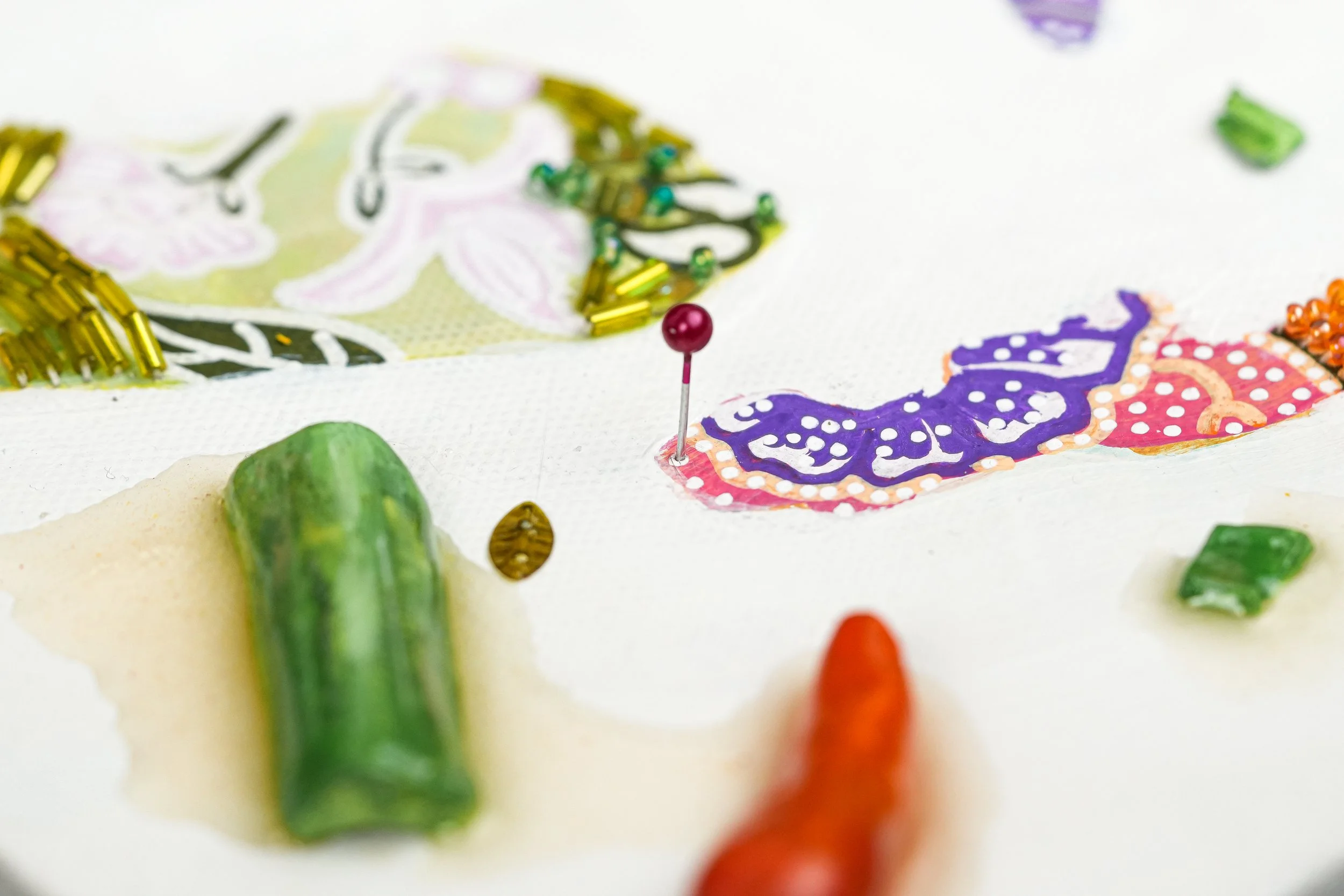
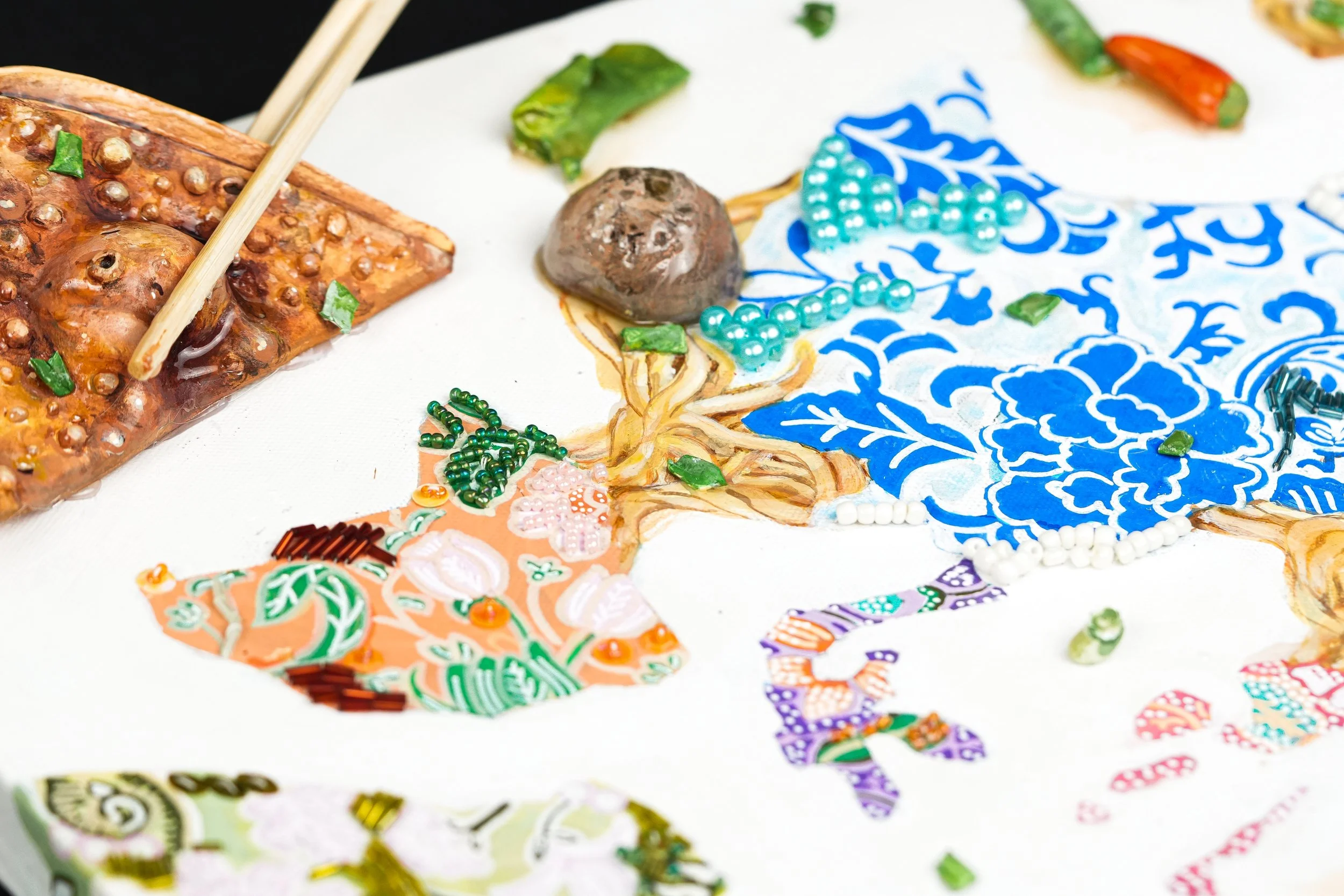
Two of the less obvious nuances of this piece are the soup spill, shaped to the map of China and then the islands of Indonesia, covered in a Chinese porcelain pattern and Batik patterns for Indonesia. If looked more closely at, the patterns created with acrylic markers include embroidered beads to emphasize the importance of detail and to show appreciation for my grandparents’ hard work, as it was a laborious yet minuscule aspect of this work.
References:
Xitan. (2019, May 23). What makes the rooster design on a bowl so special? Nyonya Cooking. https://www.nyonyacooking.com/magazine/what-makes-the-rooster-design-on-a-bowl-so-special~ZPIzWs2j4. Accessed 5 February 2026.
